One major change for the logistics industry this year is the end of the de minimis exemption. Along with tariffs this is a significant change for global shipping.
A brief background
Previously, the de minimis exemption allowed shipments valued at $800 or less to enter the United States with minimal customs documentation and duties. This policy allowed global e-commerce to grow without the typical costs and delays that larger shipments faced. This year the exemption ended for China on May 2 and then ended for all countries on August 29 with no future changes planned at this time. The change was driven by increasing concerns around trade compliance, lost tariff revenue, product safety, and the need to ensure a level playing field for domestic manufacturers.
What’s happening now
These new requirements are causing operational complexity for logistics providers managing international shipments, with impacts on clearance times, shipping costs, and compliance procedures.
DHL is expanding its team of customs agents in order to handle the increased customs requirements following the end of de minimis. Deutsche Post and others are resuming parcel shipments into the U.S. after halting these due to the changing regulations. The impact to FedEx was significant and caused them to reduce freight aircraft from Asia to the U.S. by 25%. According to FreightWaves, the previous end of the de minimis exemption for China and Hong Kong, also had an impact since “They represented more than 70% of the 1.4 billion packages imported in fiscal year 2024 under a rule that allowed shipments valued below $800 to clear customs duty free and with minimal paperwork.” Continued shifts in the parcel network could be seen due to these changes.
Future considerations
Looking ahead, the end of the de minimis exemption will continue to shape logistics strategy and best practices. Shippers and carriers who are impacted by this change could benefit from investments that enable customs compliance. Additionally, retailers may need to revisit sourcing strategies, considering new ways to consolidate shipments or make alterations to parcel routing to minimize duty exposure. Ongoing dialogue with supply chain partners will be important. By staying informed and proactively adapting to these regulatory shifts, logistics leaders can improve their operational resilience and continue delivering value in a rapidly changing environment.
Looking for help managing your supply chain? We encourage you to get in touch.
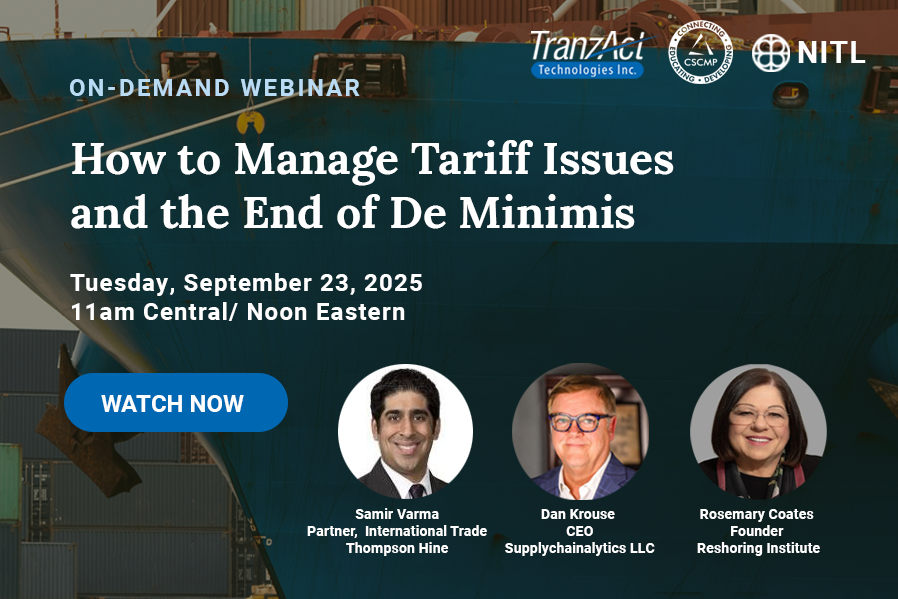
Interested in more information about the de minimis changes? Valuable information around this topic including the important variables companies need to consider as they weigh reshoring and nearshoring options can be found in our recent webinar How to Manage Tariff Issues and the End of De Minimis.